Showing posts with label movie review. Show all posts

Tuesday, February 21, 2017

Movie Review: The Ghazi Attack

The Ghazi Attack
Inspired by True Events
Director: Sankalp Reddy
Producer: Anvesh Reddy, Venkatramana Reddy, Prasad V Potluri,, NM Pasha, Jagan Mohan Vancha
Music: Krishna Kumar, better known by his stage name K
Writer: Azad Alam (Hindi dialogues)
Editing: A. Sreekar Prasad
Star Cast: Rana Daggubati, Atul Kulkarni, Kay Kay Menon, Taapsee Pannu, Rahul Singh, Satyadev Kancharana
Language: Hindi

Review By Ila Garg


The Ghazi Attack has been on my must-watch list since the day its trailers started pouring in. It is inspired by true events from the Indo-Pakistan war of 1971. I was amazed when I first heard about this war. This attack was classified and it happened before I was even born, but the valour shown by the navy moved me to the core.

Thursday, August 4, 2016

Movie Review: #Madaari


Madaari
Director: Nishikant Kamat
Language: Hindi
Review By Ila Garg

I have been watching a lot of movies off late. This weekend, I got a chance to watch this socio-thriller movie, Madaari directed by Nishikant Kamat. The movie released on 22nd July 2016 and is presented by Bharat Shah, produced by Shailesh Singh, Madan Paliwal, Sutapa Sikdar and Shailja Kejriwal and co-produced by Nishant Pitti and Kshitiz Bhardwaj.

Irrfan Khan is known for choosing out of the box subjects and this time he chose to do a movie that is based on the present political situation prevailing in India. His onscreen presence took the movie to a different level. No one could have played Nirmal Kumar the way he did. He was into the character – top to bottom. Not only that, the way he portrayed the hard-hitting subject is commendable. The emotions can be felt by one and all, no wonder it is often said that Irrfan Khan has one of the most expressive eyes.

Madaari is a story by Shailja Kejriwal. However, the credit for writing the power-pack dialogues and screenplay goes to Ritesh Shah. Vishal Bhardwaj gave the music to the film. Avinash Arun did the cinematography and Arif Shaikh did the necessary editing to ensure that the movie is well-received by the audience.

Right from the opening scene, the movie was a delight to watch. Indian political scenario has been much talked about, but the way this movie unveils the subject is indeed jaw-dropping! Irrfan’s acting is natural and realistic and did gave me goose bumps. I won’t give you spoilers here as I want you all to watch the movie yourself as good cinema has become a rarity, and when it comes, no one should give it a miss.

The mise-en-scène of the film is great too as the director has chosen perfect setting and time frame to shoot the scenes. Even the montage is done well and looks smooth onscreen.

This complete family film #Madaari is a definite must-watch as it convincingly delivers the message to the audience!

Here's the star cast of the movie:
  • Irrfan Khan as Nirmal Kumar
  • Vishesh Bansal as Rohan Goswami
  • Jimmy Shergill as Nachiket Verma
  • Tushar Dalvi as Prashant Goswami
  • Uday Tikekar as Nimbalkar
  • Nitesh Pandey as Sanjay Jagtap
  • Sadhil Kapoor as Cheeku
Ratings: 4/5

Do watch it and share your views in the comment box below. I would love to hear your opinions.


Thursday, July 21, 2016

Movie Review: Sultan


Sultan
Genre: Action & Drama
Director: Ali Abbas Zafar
Producer: Aditya Chopra
Music: Vishal – Shekhar
Editing: Rameshwaram S. Bhagat
Studio: Yash Raj Films
Language: Hindi
Review By Ila Garg

Salman Khan's Eid release Sultan has been much talked about. So at last, I too decided to catch the flick and see for myself that what is so special about it. The 2016 Hindi Movie, Sultan is directed by an experienced director Ali Abbas Zafar and produced by Aditya Chopra. The Yash Raj Film banner has always managed to come up with extremely heart touching subjects and create magic on the big screen. I watched the movie at Big Cinemas, GIP, Noida - 7 PM show!


I won't get into the details of how the hall was or how the people there were! I will instead move on to tell you all how the movie was.

Right from the opening scene, the movie was a delight to watch. I am not a Salman fan, yet his overpowering presence did send ripples across the theater as I could hear people shouting and getting involved with the character of Sultan Ali Khan (played by Salman Khan). Anushka Sharma did an excellent job as Aarfa Hussain, however, her character could not create much impact. I had expected her to be equal to Sultan. But, Aarfa like a typical Indian girl gave up her career for Sultan once she is married to him and gets pregnant. Aarfa then finds her happiness in Sultan who was never a wrestler before meeting her. He even says he is Sultan - the wrestler because of Aarfa. Eventually he does become quite successful in his career, only to turn out to be highly arrogant and messing up his family life with Aarfa, who requested him to stay back and not go for a match as she would be needing him while delivering their child.

Amit Sadh (as Aakash Oberoi) and Randeep Hooda (as Fateh Singh) have played their parts well and made their mark in the movie. In the first half, Govind (played by Anant Sharma) who is a close friend of Sultan narrates the famous love story of Sultan and Aarfa and what led to Sultan giving up his career and go on a quest of opening a blood bank in the remote village of Haryana so that no other Aman (his unborn child) ever dies. Aakash did the great job of convincing Sultan to restart his career at the age of 40-45 when almost everyone had given up hopes on him. He roped in Fateh Singh to train him and come back to his form.


As a die-hard SRK lover, I loved the moment when Salman as Sultan said, "Shahrukh ka mazaak mat udhao ... manne bahut pasand hai ... jab woh ladki ke aankh mein aankh daalke dekhe hai na toh andhi ladki bhi patt jaave hai." Salman's dialogue delivery is awesome and will leave you laughing throughout.

The music was the USP as right from the first score to the last, I enjoyed it flowing through my ears. Irshad Kamil has done a good job with the lyrics. The song Jag Ghumiya is extremely addictive. The background score of khoon mei tere mitti, mitti mei tera khoon, was overpowering the scenes and blended well with the scenes.

Overall, I would recommend this movie to one and all.

Ratings: 4/5

Also read review by Kanika on TGC.

Thursday, June 26, 2014

The Unwanted Shadow - Book Review


The Unwanted Shadow
By Bhaskaryya Deka
Review By Ila Garg

The Unwanted Shadow is a novel by Bhaskaryya Deka, and is published by Half Baked Beans. The print quality isn’t up to the mark though, since I found it difficult to read through few of the pages. The book has an apt cover, you will realise this more as soon as you finish the book. The font used for the title of the book could have been modified though. The title is tempting clearly arousing reader interest.

The author, Bhaskaryya Deka is pursuing B.Tech in Mechanical Engineering at Indian School of Mines. He is an avid reader, with particular interest in Literary Fiction. He owns two blogs where he carries on with his writings. When he is not writing, he likes to spend his time listening to music, hanging out with friends, and travelling. His debut book is titled ‘Caught in a Storm’ published by Zorba Publishers Pvt. Ltd. last year. The Unwanted Shadow is his second book.

The blurb reads as, ‘Leaving home and the memories of his past behind was what Mohan intended to do when he left for Delhi. And he is proven right in his decision, because two years later, he sees his dreams shaping up. For some days, it feels to him like he is in a paradise… marrying the girl of his dreams, becoming a recognized writer. What more can anyone wish for?

But this bliss is destined to end soon. For the darkness is almost upon him, ready to engulf everything he loved in its merciless embrace.

Only one person can save him… A friend, an enemy. An Unwanted Shadow.’

Initial impressions of the book from the title, cover, and the blurb – intriguing thriller! And yes, it lives up to your expectation. This sums up the plot well:

Mohan, a small town boy, is nothing but hopeful when he moves to Delhi to complete his education. After all, this is what he had always planned to do, to take a leap towards his big dreams. And for once he finds his new life to be absolutely lovely, like he has often pictured it would be.

But this good phase doesn't last long. His life is soon shattered to pieces when his first relationship meets a tragic end. A sadness like he had never known before overwhelms him, keeping him wide awake at nights. But it is just the beginning, beginning to a terrible chain of events that would lead him to a deadly confrontation with his own dark past.

Will Mohan be able to overcome this darkness? Will he ever get solace? Or will his innocence be lost in the intense color of blood? 

The way the author has developed the story is indeed something to look out for. Indeed, the second half is far more compelling. But the suspense is well built from the very beginning when the characters are just introduced.

It seems plain in the first half but the plot takes a leap mid-way. The story doesn’t go straight. It complicates with every page. Unexpected twists will keep the readers interested to reach the end. The author takes the readers along with him in Mohan’s journey and shocks them with some revelations in between and finally leaves them gasping.

The storyline is captured well and the author hasn’t much disappointed the readers. What happens after he takes a stand against his own father and decides to leave for Delhi makes the base of the story.

The 166 page book is a perfect quick read where readers should be prepared to expect the unexpected. I mainly loved the book because of the plot that is so different from the league. In the scenario where Indian Fiction is flooded with themes of romance, The Unwanted Shadow is a relief by emerging as a thriller that will shake you from within. The urge to reach the climax, kept me hooked all the time. The language and pace is comfortable for all the readers. A satisfactory work by the author.

The too many twists in the plot is just one of the reasons you want to keep turning the pages to find out what happens in The Unwanted Shadow. To find out whether Mohan is able to survive in Delhi or not, how he falls in love, is he able to marry her, what obstacles come in his path and how he manages to face them, does he ever return to his hometown, how does the marriage affect him, who is this unwanted shadow that never seem to leave him, what consequences is he subjected to because of this unwanted shadow; you will have to read the novel, The Unwanted Shadow.

The book is undoubtedly a nice read. It kept me glued. Nowhere was I bored, and for this the author deserves an applause. I recommend this book to all those who are tired of reading the usual romance fictions, to those who love this particular genre, and to those who are looking for something to read during their travel time.

‘Yay’ Factors: The cover, story line, narrative, a completely different theme, unusual revelations, title, dialogues.

‘Nay’ Factors: The beginning could have been more appealing, initial chapters somehow seemed lighter.

Kudos to the author for daring to tread the road less travelled!


Rating: 4/5


Buying Links: Homeshop18 | Amazon

Thursday, August 15, 2013

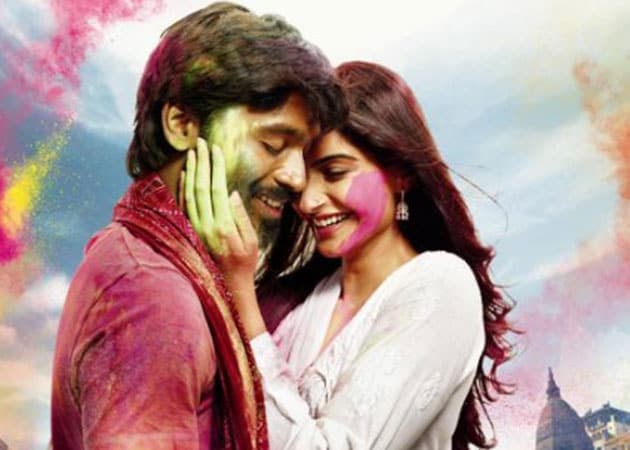
Raanjhanaa : As seen by me!


Raanjhanaa film in itself is not a profound film. It has several flaws. Therefore, it cannot be put under the category of ‘Classics’ and yet it did a very good business. Audience gladly responded with laughter to certain situations picturized in the course of this movie. Laughter, in a way, is also a symbol of acceptance. The contemporary audience responds to swearing, double meaning dialogues, atrocious scenes, indecent comments, and vulgar expressions, with a smile and laughs out loud. They enjoy such things in a movie and thus, they have gradually become a part and parcel of contemporary cinema. People actually gave a standing applause in the hall for the performances in this movie. How often do you see that? Such indecency shown in the films imposes a big question mark on the mind - sets of the audience at large. Not only audience these days is accepting it but also calling this movie Raanjhanaa as a tragedy. They were coming out of the cinema hall with happy satisfied faces and remarking that Raanjhanaa was a different movie; unlike most of the films it doesn’t have a happy ending. It came to me as a shock as for me the movie crosses the limits of decency at many points.

An article in Hindu dated July 21, 2013, quotes, “Despite its gimmicky, populist and male favouring one-liners, the film may be interpreted within its generic context. Raanjhanaa is the tragedy of an irrational, impassioned, obsessive lover. Depicting such a crazed state-of-mind on-screen requires the lover doing things that go against ordinary and socially accepted expressions of love. Kundan’s wrist slitting is neither intelligent, nor advisable. It is a device that portrays the crazed intensity of his passion. Similarly driving his scooter into the Ganges with Zoya behind is a reflection of his shock and trauma upon discovering that she loves another man, not an attempt to murder.” The question raised here is that - Is Raanjhanaa the tale of an irrational, impassioned, obsessive lover, or thinly disguised male supremacist storytelling?

Kundan is a deeply flawed character. He’s obsessive, selfish, delusional, mercurial, thoughtless, hugely impulsive, self-destructive and bad tempered! While Zoya is a highly self – centered character who mostly uses Kundan for her own interests. She seldom cares about Kundan’s feelings.  Makers of the film have ensured that both Zoya and Kundan are kept real by making them as vulnerable and flawed as we are. Writer Himanshu Sharma has created a hero harking back to the literary tradition of the intensely-passionate-deeply- flawed-self-destructive-tragic-male-protagonist, seen in almost every ‘great’ tragedy in literature be it Saratchandra’s Devadas or Shakespeare’s Othello. Sharma’s Raanjhanaa remains consistent with the generic patterns of the tragic form, as we are compelled to sympathize with this problematic male protagonist who mistreats the very women he loves but is redeemed by the author in a noble death. Here, in Raajhanaa we similarly tend to sympathize with Kundan and therefore support the idea of a crazy lover.

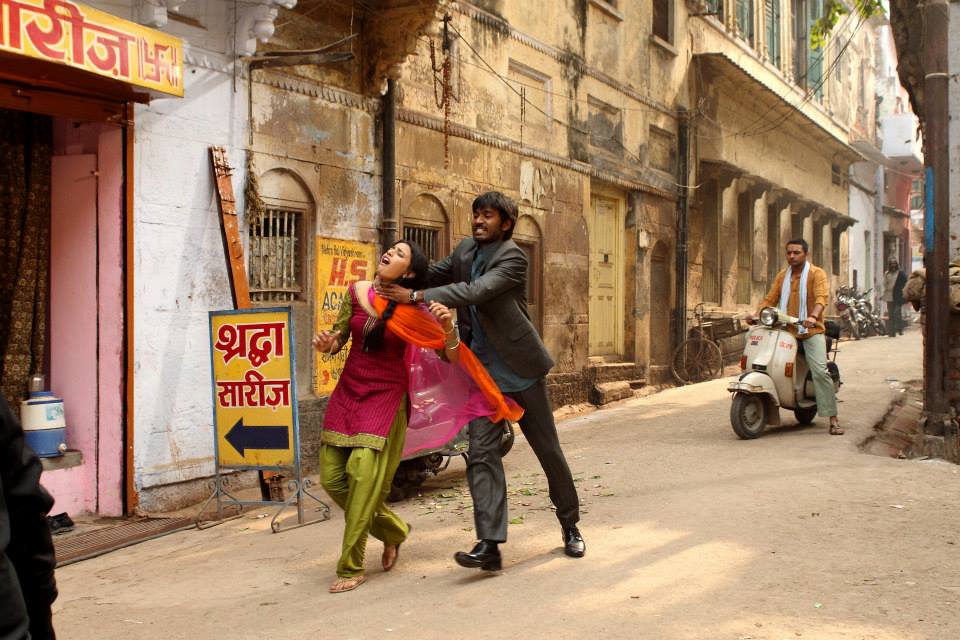
Kundan never becomes a serious figure of threat because Zoya is never shown to be scared of him. Her first response to his overture is a fearless confident taunt and a tight slap. Because Zoya consistently remains unflinching and unafraid, Kundan never fully becomes that sinister, threatening, figure of the dangerous stalker.

Love shown in the movie is more of a violent nature. It is therefore, an unapologetic celebration of crazy love. A story of how love makes otherwise rational people behave in a stupidly self-damaging manner. It is a tale of one – sided love where Bindiya madly loves Kundan and Kundan can only see Zoya. It is an irony that Kundan on one hand remains heartless towards Bindiya and expects Zoya to adhere to his love. 

Looking at the title Raanjhanaa reminds of the legendary love story of Heer Raanjha. However, the character of Raanjha has been highly distorted in this movie. While Raanjha’s love was pure, Kundan’s love is more of an obsession. Kundan is perhaps suffering from Obsessive Compulsive Disorder in medical terms like the main characters of movies Darr, Anjaam, Baazigar, etc.

Raanjhanaa depicts the various shades of manhood and celebrates superiority of masculinity. Our mind - sets are still rooted in the feudal system. It also highlights the so many problems prevailing in our society. The movie indirectly remarks on the disorder in the men mind which leads to cases to rapes, acid throwing, and what not. There is a superiority complex in men these days which is a consequence of the feudal mind – sets. What happened recently in JNU symbolises such narratives are well received in our society. 

The kind of lover shown in the movie cannot be accepted in real life, though audience is romanticising Kundan’s character. Somewhere in our psyche, feudal notion of masculinity continues to exist which compels us to appreciate Kundan’s love for Zoya and we fail to realise that it’s his obsession for her in reality. This is the reason we are responding to such narratives and this particular film has done such a good business.

We believe that over the years we have evolved a lot. Our notion of modernity is limited to clothes and technology merely. Also in reality, our evolution is only materialistic, our mind – set continues to be the same. This movie Raanjhanaa gives us a platform for self – introspection.

The concept of love has widely changed from the purity in Teesri Kasam to the obsession in Raanjhanaa. The image of love and lover being populated through this film is very stereotypical of our society. Nowhere does it give us a new way of looking at man – woman relationship. It does not even explore the nuances of man woman relationship or Hindu – Muslim conflicts. 

Zoya’s character has been criticized largely by popular critics for being manipulative, self – centered, cold and heartless. There can be a different way of looking at her character. Zoya was just a very human, totally realistic and thus imperfect young girl dealing with confusing, and contradictory matters of the heart. There is nothing wrong with an adolescent 14-year old being flattered and responsive to the devotion of a young boy. It’s very natural. In words of Swara Bhaskar, “What is wrong if eight years later she has moved on? In fact Zoya’s character is not calculating but naive in trusting Kundan’s friendship; she’s honest about her lack of love for him, about her boyfriend. She’s perfectly frank and sensible when she asks him if he intends to ruin her life for that one childish mistake she made. And when she lies, it is to save Kundan the pain of realizing that Zoya in fact did not reject him because he was a Hindu, that she simply didn’t love him! With Zoya, Sharma taps another classic literary trope- the unattainable lady love, the mistress-on-a pedestal who the poet will never attain but continually pine for. Zoya is finally redeemed despite all her flaws when she says wretchedly in the climax to Kundan that ‘The world will spit on me if I fall in love with you, but I think I have.’ Zoya’s tragedy is that she must plot murder to prevent herself from falling in love with the very man who ruined her life and accidentally killed her fiancé.”

As much as Zoya hates Kundan’s ‘gawaar’ (villager) notions of romance and pulls him up for slitting his wrists stupidly, she does exactly the same thing in a different context later in the film, without quite realising that she is not very different. She just chose to pretend she was intellectually superior.

Raanjhanaa is clearly not the story of Muslim-Hindu relations in Banaras, nor is it a study of the social relations between the numerous castes that inhabit the city, and it is certainly not the story of some student political movement threatening to sweep Delhi’s assembly elections. Different religions are merely used as a background. Even if Kundan and Zoya belonged to the same caste, the marriage wouldn’t have taken place. Nowhere does this film sensitize the audience about communal disharmony. It doesn’t take you deep into the problem; instead it touches it only at the surface level. Raanjhanaa is the story of a boy who like the Raanjha of folklore fell obsessively in love with an unattainable girl. She loved someone else, and he despite initially trying to help the girl unite with her lover, on learning of her lie to him unthinkingly unleashed a tragedy that ruined the lives of everyone involved and found redemption only in death. 

This film, doesn’t give us any progressive ideas and yet the questions that it raises are important. Love as seen these days, is something meant to be taken. There is no concept of giving involved in the contemporary world. Indian cinema continues to depict love as something to get. Women are like trophies to be achieved and acquired by men. Sentiments of women are never given a purview. 

A quote from Umrao Jaan reads as, 
“Tujhko rusva (disgrace) na kia, 
Hum bhi pasyemaan (embarrass) na huye.
Ishq ki rasam ko, Iss tarah nibhaya humne.”

Although, here in the movie Raanjhanaa, Kundan not only causes embarrassment and disgrace to Zoya, but he makes himself a laughing stock too. Thus, from Umrao Jaan to Raanjhanaa love has changed its dimensions.

Heer Raanjha also differed from Raanjhanaa in its definition of love. Raanjha of folklore believed in love as endurance while this concept of endurance is gradually vanishing these days. There was a time when love was not forced upon, rather it comprised of waiting for the beloved to change her mind. True love is when you are not even sure if your beloved will commit to you, but you still wait for her and keep your expression of love subtle. Sometimes, you have to sacrifice your love as shown in the movie Teesri Kasam. There can be several reasons for this sacrifice, what matters is love, love and nothing else.

Love is not about getting the person always; love is about loving the person.

Men now – a – days, believe mostly in getting his beloved even if it involves following her publically everywhere, discussing about her in front of friends and other people as if she is merely a commodity out there waiting to be possessed by one of them. Such mind – sets have created havoc in our society. Male ego is not strong enough to accept rejection. Image of macho created by the Cinema is ultimately harming our society.

Indian Cinema wasn’t like this earlier. Gradually this concept of obsessive lovers seeped into the Indian Cinema from the movies like Darr, Anjaam, etc. Now, the extend is so much that even our societal mind – set has started reflecting this notion of love resulting in the recent JNU case where an educated guy stooped to such a level that he not only brutally murdered the girl but committed suicide too, all in the name of love. Love is slowly taking the form of heroism. 

It’s very difficult to earmark the characters portrayed in this film Raanjhanaa as black or white. We all are shades of grey after all. Every character in the movie has multiple shades too. 

For instance, take Bindiya; in one scene she prays to Gau-mata for Zoya’s death, due to her undettered love for Kundan despite constant humiliation and beatings, and next moment she also participates in the plan to rid Zoya from an unwanted suitor.

Not only love and endurance but the concept of Deewangi has also taken a major turn. The Deewangi in Kundan and Zoya is nothing as compared to the Deewangi of Raanjha, Majnu, and even Meera. Rather the concept of Deewangi has been trivialised in this movie. It has been presented to the audience as a commodity, something that is saleable. We need to stop and introspect ourselves that in which direction are we headed to? 

This film by and large is a signifier of the sickness pertaining in our society. This ailment has ruined our existence in the society. Women are seen as things to possess. We are largely witnessing cases of male superiority existing in our patriarchal society in the form of rapes, recent JNU case, as well as Honour Killing which includes the recent Kolkata Case where a brother actually beheaded his sister’s head and took it to the police station to show that he killed his sister as she loved someone. Such cases leave me bitter. It indicates the abnormality and perversion of human minds. Raanjhanaa reflects to these problems prevailing in our society by the various street plays shown in between the plot. 

Position of women in society is also being questioned. How Zoya’s father slaps her and sends her immediately to Aligarh initially and later tries to get her married without her say. Whenever there is a love triangle in Indian Cinema, one man sacrifices his love for the other. But nowhere the say of the girl is taken in view.

Kundan in my eyes is not a romantic poetic lover. He is more of a stalker, a Roadside Romeo. Problem with Indian Cinema these days is that it has created a melodrama of love. We have started believing that what we see on screen is true love. Media is powerful and it has somehow managed to create a different meaning and identity of love and lover for us. These concepts of love need to be questioned.

Lovers these days have become self – centered. The happiness of their beloved is no longer counted. They have failed to understand the real meaning of love lies in the happiness of the beloved.

Kundan seems to be a lover only till the point where he first proposes Zoya. That moment onwards, the love portrayed gets cheap as he publically holds Zoya’s hand causing disgrace and embarrassment. He lies about his name and has no shame even when Zoya tells him that she will slap him. In fact, he turns so shameless in her love that he gladly gets slapped 15-16 times by Zoya on the street.

The opening dialogue of the movie, ‘Ladki aur rocket insaan ko kahi bhi le jaa sakte hai’ is again stereotypical in nature. Kundan’s dialogue, ‘Humein pakadna muskil hi nhi namumkin tha’ taken from the movie Don, indicates his own perception of himself which wasn’t good. He considered himself as a carefree guy, a brat. Also, this dialogues and various old songs taken from different movies over the journey of Indian Cinema like ‘Bas ek sanam chaiye, Humka ishq hua hai yaaro, Saamne ye kaun aaya, etc.’ hint at the Inter – texuality in the movie. Zoya’s utilitarian attitude is clearly reflected in her dialogue, ‘Do ghante ke liye baat ki hai, 200 ka kaam karne de usey’. Jasjeet’s dialogue, ‘Inn ladkiyo ke dimaag ke hisaab se kuch nhi karna chaiye’ again hints towards male chauvinist attitude and stereotype of men. 

References to Ramayana at several points like, ‘Ramayana mei sirf Sundar kaand nhi hota, Lanka Dehen bhi hota hai.’ ‘Bal kaand samaapt aur Lanka Dehen shuru.’ are merely because Kundan is a son of a practising Brahmin. Also, it says that the playfulness of his life is over, and now the war has begun. It is merely included to refer to the new phase added to his life. 

Inspite of all the criticism, there is no denying that Raanjhanaa is a brave film to explore the crevices of young minds that straddle many worlds — social, intellectual, political and personal — that it is easy to lose your mind in the complex politics of modern relationships. Raanjhanaa has a male – centric perspective clearly and is disturbing as well as emotionally challenging.

WORD COUNT : 2615

Wednesday, May 1, 2013

Movie Review: Aashiqui 2


Its a blockbuster out of a string of songs sung by fresh voices. And a pair of new faces, artfully hidden under a jacket, for the purposes of a poster. The songs came first, the movie followed. Aashiqui's soundtrack became the new trend; the rage. So did that instantly-recognisable image of young-lovers-under-jacket. 
Though its a fact well-known that the movie's story highly resembles that of Frank Pierson's 1976 drama 'A Star Is Born'. 
Aditya Roy Kapur and Shraddha Kapoor get their big breaks playing the romantic duo in this flick. Aditya is cast as Rahul Jaykar, a wasted rockstar who is battling alcoholism. He spots the incredibly talented Aarohi Shirke (Shraddha) crooning at a bar and decides to take her to the heights and let her touch the moon; the stars. The narrative unfolds their blossoming romance and a couple of soothing numbers make it a quintessential romance. 
For their love to be liberated from all the rituals of competitiveness, one of the lovers must make a huge sacrifice before the end. For love to live the lover must die. It's carried off in this film with an exuberance of emotions.
One thing that is really disconnecting about this movie is that reason for Rahul's alcoholism are never explained anywhere in the whole movie. Aditya Roy Kapur has mettle and Shraddha is beautiful too. But their chemistry fails to create any overall spark. Aditya's earlier movies like Action Replayy and Guzaarish failed to bring out his real potential to the fore. 
'Aashiqui 2' is a film with its heart in the right place. There are many moments of pure cliché between the lovers. And these moments, so deeply entrenched in the conventions of our cinema, blossom into fresh statements on modern love. 

Rahul : Aarohi
Aarohi: Kya?
Rahul: Kuch nhi..Bas yuhi.

The way Aditya looks into Shraddha's eyes is magical and enticing. It actually made me as an audience, fall in love with Aditya. The dialogues too reach out to the audience. Some of my favourites dialogues from the movie spoken at different points of time:


Aarohi: Itna pyar kab hua mujhse?

Rahul: Pyar, Mohabaat, Aashiqui, Sirf lavzo ke alava aur kuch nhi. Par jab wo mili toh inn lavzo ko maine mil gaye.

Rahul: Lagta hai mujhe ishq ho gaya hai.

Aarohi: Ye aadat tumhare saath reh sakti hai, main nhi?

Aarohi: Agar itna hi darr tha, toh itne paas kyu aaye tum?

Aarohi: Theek hai, main jaa rhi hu, tumse aur iss kamyaabi se dur.

Aarohi: Mere burey waqt mei tum the mere saath, ab agar ache waqt mei tum nhi, toh ye waqt bhi mujhe nhi chaiye.

Rahul: Dukhi ho gayi na tum mere ishq mei?

Last but not the least, I loved the way Aarohi wants to drown herself completely in Rahul's world and immerse herself in his love and further describes how she wishes Rahul to come to her and say that he has got bored of drinking and then they both will return back to the usual world.
I must admit this film does a very competent job of making us believe that true love still exists in this world and its a bliss. Man, woman, music, ambitions, dreams and despair, this movie has it all. 

In one word, I can summarise the movie as - 'Cute!' :)


Source: Internet


Thursday, July 26, 2012

The Cocktail Movie Review!


Okay so the movie is a must watch for sure. It’s RECOMMENDED especially for those who love to laugh. Cocktail follows the basic Bollywood genre-geometry of a love triangle. The good part about this one, unlike most love triangles, is that the three protagonists get to know who loves who pretty early in the picture and the revelation isn't stretched till the climax. Cocktail, basically, is the same prose with new grammar.
So the story is about a compulsive flirt Gautam (Saif Ali Khan) who gets into a no-strings-attached relationship with the hot-n-happening Veronica (Deepika Padukone). Girl-next-door Meera (Diana Penty) is literally the girl Gautam takes home to his mother (Dimple Kapadia) to cover-up his live-in relationship with Veronica. Until by interval point his heart starts fluttering for Meera. And the rest as they say is 'history'.
The characterizations are basically been-there-seen-that. The guy is commitment-phobic until he meets his match and realizes what 'true love' is. The firang female has a frivolous attitude until she realizes she, too, is vulnerable to feelings. The realisation dawns upon her that she too has a soft corner. The introvert desi dame isn't aware of her own beauty until the boy makes her realize it. Further she goes in the let-go-love-for-friend mode.
The one thing that I personally loved about the movie is its songs and their timings. Anil Mehta's cinematography is picture perfect. Pritam's music is peppy and some new voices add freshness to the soundtrack. From honey singh to coke studio, nothing was left out. The dialogues are another thing I cannot stop appreciating. I loved the originality of dialogues. They were just so perfect and catchy.
The narrative never tries too hard to build the chemistry between the characters. Like Veronica gets a random stranger Meera home and they become the best of buddies. Or Gautam and Veronica just hit if off in two scenes. So do Gautam and Meera subsequently, and if it wasn't for the kiss at interval point, one wouldn't know cupid has cross-connected. Further Meera's sudden truce with her past love (Randeep Hooda) in the pre-climax seems half-baked. Yet, at the expense of conviction, what you don't mind is that the story keeps moving ahead without expending too much time on the obvious and inescapable elements of a love story.
The 2 hours and 27 minutes of the movie is worthwhile. Nowhere does the viewer feel that the story is dragging. One tends to move with the flow.
The pacing drops in the second half, and one gets more impatient with predictability seeping into the plot. Evidently you know which girl would win in the end but you lose out to the protracted proceedings. In fact when the hero extensively proposes the heroine in the last scene you cannot stop yourself from indulging in laughter yet your eyes are filled with tears.
The first half was hilarious while during the second half I was actually laughing with tears in my eyes. The movie is typical in its story but the way of presentation is what makes it unique.

Despite all its conventionalism and inconsistencies, what still keeps you connected to the movie is its attitude to never take itself too seriously. The humour is inherent and scenes like Saif's first encounter with Deepika or Dimple Kapadia's artificial respiration to Deepika are hilarious.
From the cast, Deepika Padukone comes with the most impressive performance and is exceptionally good in the drunken scene where the happy-go-lucky Veronica shows her vulnerable side. And while she remains absolutely natural in her act, she looks stunningly sexy too. Saif Ali Khan is in his comfort zone in this romantic comedy and effortlessly charms girls (both on and off screen). Diana Penty comes with the requisite rawness that her character demands and is quite decent in her debut act. The minimalism in her looks often reminds of Giselle Monteiro's character from Love Aaj Kal. Dimple Kapadia comes as a pleasant change to the Punjabi-mom prototype in Bollywood and is quite likeable. Boman Irani does well in his short role. The talented Randeep Hooda gets no scope in his three-scene two-bit role.
Seriously, some good friends are too good to be shared!
To sum up, this one is old Cocktail in new bottle!
badge