Showing posts with label Seminar. Show all posts

Monday, February 2, 2015

A paper on Women of Brewster Place


The title of my paper is “Plight of a Black Woman: A Critical Study of The Women of Brewster Place”.

“They were hard-edged, soft-centered, brutally demanding, and easily pleased, these women of Brewster Place. They came, they went, grew up, and grew old beyond their years. Like an ebony phoenix, each in her own time and with her own season had a story.”

“When you’re a black woman, you seldom get to do what you just want to do; you always do what you have to do.”

Born in 1950, Gloria Naylor had witnessed her parents migrating from rural southern communities to large, industrial northern cities, during the Great Migration of African-Americans. The Women of Brewster Place, which is her first novel, reflects this dual cultural inheritance. The stories that reflected her own experiences as an African-American woman also influenced some parts of it.

Toni Morrison’s first novel, The Bluest Eye published in 1965, which received widespread critical acclaim, had a profound effect on Naylor. It gave her the confidence and authority she needed to write about the places and people she knew.

The Women of Brewster Place was published in 1982 after Naylor completed a master’s degree in African-American studies at Yale. The novel got many appreciations from the critics and authors for its lyrical prose style and its frank yet hopeful portrayal of an African-American community struggling to survive in a depressed landscape. Through this work, Naylor tried to present the ideas that comprised of mainly the experiences of African-Americans, especially those of black women.

The Women of Brewster Place reflects on many ideas including class, gender, color, sexuality, and general reflections on the African-American experience in the United States, from the legacy of the Civil Rights Era to the importance of faith and religion.

Women, who came to Brewster Place in search of a home, form the basis of this novel. The concept of home is well explored in the novel, it is a place where relationships flower and breathe. Brewster Place is a housing development in an unnamed city, a poor neighbourhood on a dead-end street. It seems destined to be an unfortunate place since the people linked to its creation are all corrupt. In words of Naylor, I quote, “Brewster Place was the bastard child of several clandestine meetings between the alderman of the sixth district and the managing director of Unico Realty Company”, I unquote.

The Women of Brewster Place is a fictional portrayal of events that occur during the challenging times of several women’s lives - Mattie Michael, Etta Mae Johnson, Kiswana Browne, Lucielia Louise Turner, Cora Lee, Lorraine, and Theresa. The male characters merely play the roles of antagonists for the women who are the central concern in the novel. Men are used as dramatic devices to bring conflict, of some sort, into the lives of the women residing in Brewster Place. The novel further consists of a second person omniscient view, allowing the reader to gain insight of the characters thoughts and feelings.

Naylor has efficiently used ‘Personification’ from beginning till the end, giving voices to the mute objects. It starts with Personification of The Brewster Place as a character itself, how it was born and how it looked during its youth. As described in the novel, I quote, “The gray bricks of the buildings were the color of dull silver during Brewster Place’s youth”, I unquote. As we further move deeper into one of the stories in the novel, we find instances when even the church is personified. “Canaan Baptist Church, a brooding, ashen giant, sat in the middle of a block of rundown private homes. Its multi-colored, dome-shaped eyes glowered into the darkness.”

Towards the end, there is another more prominent example, where blood oozes out of the bricks of the wall of the Brewster Place, aptly symbolizing the unending plight of the residents and the death of the dead-end street.

Throughout The Women of Brewster Place, Naylor emphasized the importance of sister hood by showing how the women are strengthened by their relationships with one another and proving that men are not necessary to their survival or happiness. 

In one of the recent Bollywood Films, ‘Queen’ directed by Vikas Bahl, a similar theme has been taken up. Women don’t need to depend on men for happiness. 

Surviving racism, rape, war, childhood neglect, and poverty, the women in this novel pull together and share a sense of sisterhood. They are all joined in their community by loss and all have a real sense, which the reader can relate to. Naylor's people are real, touchable, and tragically elegant. 

The Women of Brewster Place, attempts to trace Black women’s migration from slavery to freedom and submissiveness to self-assertion. All the women characters in the novel are exemplary of many African American women who still struggle to find a place of their own.

Each character comes as a ray of hope in the otherwise dark world. Kiswana Browne is introduced as a young revolutionist, who is determined to bring a change in the living conditions of her people. She is born in a family that can offer her a comfortable life and yet she does not want to lose her identity as a Black. So she leaves Linden Hills and resolves to stay at Brewster Place where she would be able to lead a life with her people. She is so proud to be a Black that she even adopts an African name; she becomes Kiswana instead of Melanie. She fights with her mother for remarking the black as ‘them’. In her own words, I quote, “What do you mean, these people. They’re my people and yours, too, Mama - we’re all black. But maybe you’ve forgotten that over in Linden Hills”, I unquote.

Naylor gives a graphic picture of Kiswana’s efforts to unite the women of Brewster Place to find solutions for their common problems. Kiswana also goes out of her way to help Cora Lee deal with her children. She compelled them to attend the production of a Shakespeare play being staged in the park. Cora Lee’s life takes a turn by Kiswana’s brief appearance and she starts taking interest in her children. She changes her ways and cleans the house and the children, dresses them up for the play. The performance at the play, further moves Cora Lee and by the end, she begins to imagine a better future for her children.

Kiswana Browne is thus, the representative of the young population of black women in America. The day women unite and fight for themselves; all kind of discrimination will come to an end, be it Gender Discrimination or Color Discrimination.

Another central character, Mattie Michael, had to leave her parent’s home when she got pregnant with the child of Butch Fuller. Miss Eva Turner plays a vital role in Mattie's life by taking her in during her loneliness and destitution and treating Mattie and her child, as if they are her own family. Mattie struggled to give her child utmost care yet he grew up to be as mischievous as he could be. He got into further trouble when he killed a man and was jailed. But here too as an epitome of an ever loving mother, Mattie fights for him. But Basil flees and Mattie is stuck with no son and no home. Instead of her just dwelling on the situation she moves forward and moves to Brewster Place. When she reaches there she ends up becoming a mentor to the other women who were having a hard time at the Brewster Place.

Naylor uses Mattie to portray the strengthening of women through other women. Mattie plays the role of a daughter to Miss Eva, a sister to Etta Mae, and a mother to Lucielia, thereby providing a support to them. 

The sisterhood between Mattie and Etta Mae Johnson is illustrated by each woman's willingness to help the other in their most trying times.  Etta’s long lasting struggle, in search of a dignified life and a decent life partner, highlights one of the common problems of most of the black women.

Lorraine and Theresa come as the lesbian couple introduced towards the end of the novel. They together raise the issue of sexuality. Lorraine as opposed to Theresa cares about how people see and think about her. She tries her best to fit in the Brewster Place with the rest of the women but a woman named Sophie gives Lorraine a hard time about her sexuality and taunts her.

Ben is the only one who befriends Lorraine as he had lost his crippled daughter and claims to see her in Lorraine. Ironically, Lorraine kills Ben in her frenzied efforts to save herself against her attackers. Here Naylor shows us one of the cruelest realities of the society we live in. Black women are not only prey for white men; but also for their own men. The gang rape of Lorraine brings this horrible reality to the center. Lorraine’s rape at the dead end wall shows a helpless state of women in African - American Community. She is attacked by a gang of teenagers. After the boy leaves her batter and bloody, the other one mercilessly sponges her. A black woman is smashed by her own men. Clearly, a black woman is not only exploited by whites, but within her own community, she is rendered unsafe. What can be a more brutal picture!

With whatever little strength that she had, she drags a loose brick towards the figure and bashes the person in the face, without knowing it is Ben and not the gang men who destroyed her completely.

Ben happens to be the first black resident of Brewster Place, and thus his death at the wall of Brewster Place is symbolic. It signifies the death of a community, of its inability to hold together for long. In the last scene, when the women gather to chip away at the wall that imprisons them, we are aware of the fact that the community rebellion has finally taken place. In one of the related critical essays, titled, ‘New Black Feminist Criticism (1985-2000) Barbara Christian mentions, “Brewster Place residents are displaced again, just as they had been before. They are as powerless as they were when they first came to Brewster Place.”

Thus, The Women of Brewster Place becomes a narrative of sexism and racism. It is a reflection of the pain and suffering of women who have been oppressed and discriminated against on the score of race and sex. Women like Mattie, Luciela and Cora Lee are all at Brewster Place because they have nowhere else to go; they have reached the end of the road, a dead-end because of their racial and sexual identity. They have been abandoned by their men and have to look after themselves and their children single-handedly. Traumatized and economically vulnerable, these poor women cannot survive in the white world. Brewster Place echoes with the blues, but there are glimpses of a subdued joy also. Black women are tough and enduring; they are the survivors as well as the victims.

Thursday, August 15, 2013

Raanjhanaa : As seen by me!


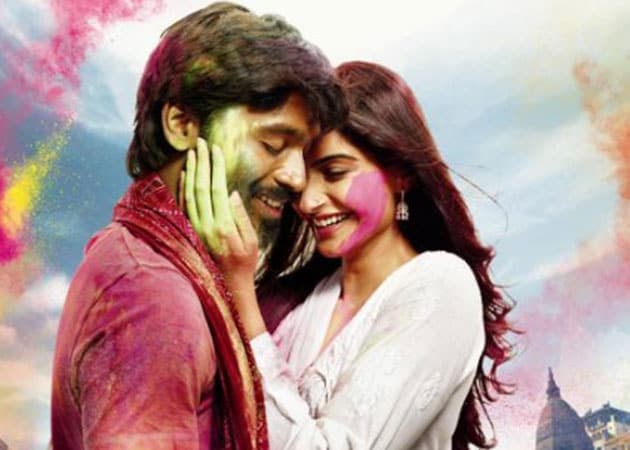
Raanjhanaa film in itself is not a profound film. It has several flaws. Therefore, it cannot be put under the category of ‘Classics’ and yet it did a very good business. Audience gladly responded with laughter to certain situations picturized in the course of this movie. Laughter, in a way, is also a symbol of acceptance. The contemporary audience responds to swearing, double meaning dialogues, atrocious scenes, indecent comments, and vulgar expressions, with a smile and laughs out loud. They enjoy such things in a movie and thus, they have gradually become a part and parcel of contemporary cinema. People actually gave a standing applause in the hall for the performances in this movie. How often do you see that? Such indecency shown in the films imposes a big question mark on the mind - sets of the audience at large. Not only audience these days is accepting it but also calling this movie Raanjhanaa as a tragedy. They were coming out of the cinema hall with happy satisfied faces and remarking that Raanjhanaa was a different movie; unlike most of the films it doesn’t have a happy ending. It came to me as a shock as for me the movie crosses the limits of decency at many points.

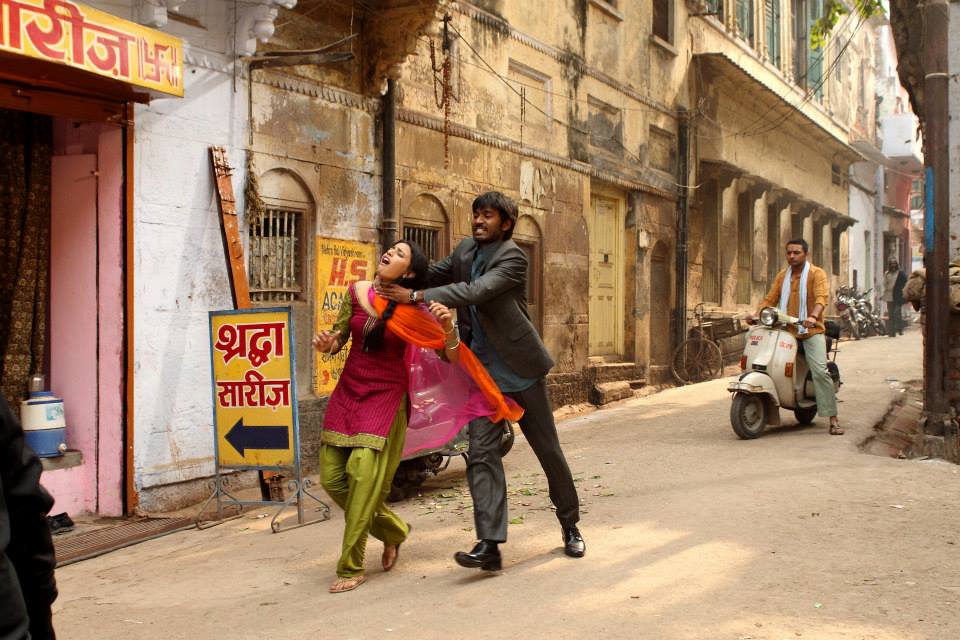
An article in Hindu dated July 21, 2013, quotes, “Despite its gimmicky, populist and male favouring one-liners, the film may be interpreted within its generic context. Raanjhanaa is the tragedy of an irrational, impassioned, obsessive lover. Depicting such a crazed state-of-mind on-screen requires the lover doing things that go against ordinary and socially accepted expressions of love. Kundan’s wrist slitting is neither intelligent, nor advisable. It is a device that portrays the crazed intensity of his passion. Similarly driving his scooter into the Ganges with Zoya behind is a reflection of his shock and trauma upon discovering that she loves another man, not an attempt to murder.” The question raised here is that - Is Raanjhanaa the tale of an irrational, impassioned, obsessive lover, or thinly disguised male supremacist storytelling?

Kundan is a deeply flawed character. He’s obsessive, selfish, delusional, mercurial, thoughtless, hugely impulsive, self-destructive and bad tempered! While Zoya is a highly self – centered character who mostly uses Kundan for her own interests. She seldom cares about Kundan’s feelings.  Makers of the film have ensured that both Zoya and Kundan are kept real by making them as vulnerable and flawed as we are. Writer Himanshu Sharma has created a hero harking back to the literary tradition of the intensely-passionate-deeply- flawed-self-destructive-tragic-male-protagonist, seen in almost every ‘great’ tragedy in literature be it Saratchandra’s Devadas or Shakespeare’s Othello. Sharma’s Raanjhanaa remains consistent with the generic patterns of the tragic form, as we are compelled to sympathize with this problematic male protagonist who mistreats the very women he loves but is redeemed by the author in a noble death. Here, in Raajhanaa we similarly tend to sympathize with Kundan and therefore support the idea of a crazy lover.

Kundan never becomes a serious figure of threat because Zoya is never shown to be scared of him. Her first response to his overture is a fearless confident taunt and a tight slap. Because Zoya consistently remains unflinching and unafraid, Kundan never fully becomes that sinister, threatening, figure of the dangerous stalker.

Love shown in the movie is more of a violent nature. It is therefore, an unapologetic celebration of crazy love. A story of how love makes otherwise rational people behave in a stupidly self-damaging manner. It is a tale of one – sided love where Bindiya madly loves Kundan and Kundan can only see Zoya. It is an irony that Kundan on one hand remains heartless towards Bindiya and expects Zoya to adhere to his love. 

Looking at the title Raanjhanaa reminds of the legendary love story of Heer Raanjha. However, the character of Raanjha has been highly distorted in this movie. While Raanjha’s love was pure, Kundan’s love is more of an obsession. Kundan is perhaps suffering from Obsessive Compulsive Disorder in medical terms like the main characters of movies Darr, Anjaam, Baazigar, etc.

Raanjhanaa depicts the various shades of manhood and celebrates superiority of masculinity. Our mind - sets are still rooted in the feudal system. It also highlights the so many problems prevailing in our society. The movie indirectly remarks on the disorder in the men mind which leads to cases to rapes, acid throwing, and what not. There is a superiority complex in men these days which is a consequence of the feudal mind – sets. What happened recently in JNU symbolises such narratives are well received in our society. 

The kind of lover shown in the movie cannot be accepted in real life, though audience is romanticising Kundan’s character. Somewhere in our psyche, feudal notion of masculinity continues to exist which compels us to appreciate Kundan’s love for Zoya and we fail to realise that it’s his obsession for her in reality. This is the reason we are responding to such narratives and this particular film has done such a good business.

We believe that over the years we have evolved a lot. Our notion of modernity is limited to clothes and technology merely. Also in reality, our evolution is only materialistic, our mind – set continues to be the same. This movie Raanjhanaa gives us a platform for self – introspection.

The concept of love has widely changed from the purity in Teesri Kasam to the obsession in Raanjhanaa. The image of love and lover being populated through this film is very stereotypical of our society. Nowhere does it give us a new way of looking at man – woman relationship. It does not even explore the nuances of man woman relationship or Hindu – Muslim conflicts. 

Zoya’s character has been criticized largely by popular critics for being manipulative, self – centered, cold and heartless. There can be a different way of looking at her character. Zoya was just a very human, totally realistic and thus imperfect young girl dealing with confusing, and contradictory matters of the heart. There is nothing wrong with an adolescent 14-year old being flattered and responsive to the devotion of a young boy. It’s very natural. In words of Swara Bhaskar, “What is wrong if eight years later she has moved on? In fact Zoya’s character is not calculating but naive in trusting Kundan’s friendship; she’s honest about her lack of love for him, about her boyfriend. She’s perfectly frank and sensible when she asks him if he intends to ruin her life for that one childish mistake she made. And when she lies, it is to save Kundan the pain of realizing that Zoya in fact did not reject him because he was a Hindu, that she simply didn’t love him! With Zoya, Sharma taps another classic literary trope- the unattainable lady love, the mistress-on-a pedestal who the poet will never attain but continually pine for. Zoya is finally redeemed despite all her flaws when she says wretchedly in the climax to Kundan that ‘The world will spit on me if I fall in love with you, but I think I have.’ Zoya’s tragedy is that she must plot murder to prevent herself from falling in love with the very man who ruined her life and accidentally killed her fiancé.”

As much as Zoya hates Kundan’s ‘gawaar’ (villager) notions of romance and pulls him up for slitting his wrists stupidly, she does exactly the same thing in a different context later in the film, without quite realising that she is not very different. She just chose to pretend she was intellectually superior.

Raanjhanaa is clearly not the story of Muslim-Hindu relations in Banaras, nor is it a study of the social relations between the numerous castes that inhabit the city, and it is certainly not the story of some student political movement threatening to sweep Delhi’s assembly elections. Different religions are merely used as a background. Even if Kundan and Zoya belonged to the same caste, the marriage wouldn’t have taken place. Nowhere does this film sensitize the audience about communal disharmony. It doesn’t take you deep into the problem; instead it touches it only at the surface level. Raanjhanaa is the story of a boy who like the Raanjha of folklore fell obsessively in love with an unattainable girl. She loved someone else, and he despite initially trying to help the girl unite with her lover, on learning of her lie to him unthinkingly unleashed a tragedy that ruined the lives of everyone involved and found redemption only in death. 

This film, doesn’t give us any progressive ideas and yet the questions that it raises are important. Love as seen these days, is something meant to be taken. There is no concept of giving involved in the contemporary world. Indian cinema continues to depict love as something to get. Women are like trophies to be achieved and acquired by men. Sentiments of women are never given a purview. 

A quote from Umrao Jaan reads as, 
“Tujhko rusva (disgrace) na kia, 
Hum bhi pasyemaan (embarrass) na huye.
Ishq ki rasam ko, Iss tarah nibhaya humne.”

Although, here in the movie Raanjhanaa, Kundan not only causes embarrassment and disgrace to Zoya, but he makes himself a laughing stock too. Thus, from Umrao Jaan to Raanjhanaa love has changed its dimensions.

Heer Raanjha also differed from Raanjhanaa in its definition of love. Raanjha of folklore believed in love as endurance while this concept of endurance is gradually vanishing these days. There was a time when love was not forced upon, rather it comprised of waiting for the beloved to change her mind. True love is when you are not even sure if your beloved will commit to you, but you still wait for her and keep your expression of love subtle. Sometimes, you have to sacrifice your love as shown in the movie Teesri Kasam. There can be several reasons for this sacrifice, what matters is love, love and nothing else.

Love is not about getting the person always; love is about loving the person.

Men now – a – days, believe mostly in getting his beloved even if it involves following her publically everywhere, discussing about her in front of friends and other people as if she is merely a commodity out there waiting to be possessed by one of them. Such mind – sets have created havoc in our society. Male ego is not strong enough to accept rejection. Image of macho created by the Cinema is ultimately harming our society.

Indian Cinema wasn’t like this earlier. Gradually this concept of obsessive lovers seeped into the Indian Cinema from the movies like Darr, Anjaam, etc. Now, the extend is so much that even our societal mind – set has started reflecting this notion of love resulting in the recent JNU case where an educated guy stooped to such a level that he not only brutally murdered the girl but committed suicide too, all in the name of love. Love is slowly taking the form of heroism. 

It’s very difficult to earmark the characters portrayed in this film Raanjhanaa as black or white. We all are shades of grey after all. Every character in the movie has multiple shades too. 

For instance, take Bindiya; in one scene she prays to Gau-mata for Zoya’s death, due to her undettered love for Kundan despite constant humiliation and beatings, and next moment she also participates in the plan to rid Zoya from an unwanted suitor.

Not only love and endurance but the concept of Deewangi has also taken a major turn. The Deewangi in Kundan and Zoya is nothing as compared to the Deewangi of Raanjha, Majnu, and even Meera. Rather the concept of Deewangi has been trivialised in this movie. It has been presented to the audience as a commodity, something that is saleable. We need to stop and introspect ourselves that in which direction are we headed to? 

This film by and large is a signifier of the sickness pertaining in our society. This ailment has ruined our existence in the society. Women are seen as things to possess. We are largely witnessing cases of male superiority existing in our patriarchal society in the form of rapes, recent JNU case, as well as Honour Killing which includes the recent Kolkata Case where a brother actually beheaded his sister’s head and took it to the police station to show that he killed his sister as she loved someone. Such cases leave me bitter. It indicates the abnormality and perversion of human minds. Raanjhanaa reflects to these problems prevailing in our society by the various street plays shown in between the plot. 

Position of women in society is also being questioned. How Zoya’s father slaps her and sends her immediately to Aligarh initially and later tries to get her married without her say. Whenever there is a love triangle in Indian Cinema, one man sacrifices his love for the other. But nowhere the say of the girl is taken in view.

Kundan in my eyes is not a romantic poetic lover. He is more of a stalker, a Roadside Romeo. Problem with Indian Cinema these days is that it has created a melodrama of love. We have started believing that what we see on screen is true love. Media is powerful and it has somehow managed to create a different meaning and identity of love and lover for us. These concepts of love need to be questioned.

Lovers these days have become self – centered. The happiness of their beloved is no longer counted. They have failed to understand the real meaning of love lies in the happiness of the beloved.

Kundan seems to be a lover only till the point where he first proposes Zoya. That moment onwards, the love portrayed gets cheap as he publically holds Zoya’s hand causing disgrace and embarrassment. He lies about his name and has no shame even when Zoya tells him that she will slap him. In fact, he turns so shameless in her love that he gladly gets slapped 15-16 times by Zoya on the street.

The opening dialogue of the movie, ‘Ladki aur rocket insaan ko kahi bhi le jaa sakte hai’ is again stereotypical in nature. Kundan’s dialogue, ‘Humein pakadna muskil hi nhi namumkin tha’ taken from the movie Don, indicates his own perception of himself which wasn’t good. He considered himself as a carefree guy, a brat. Also, this dialogues and various old songs taken from different movies over the journey of Indian Cinema like ‘Bas ek sanam chaiye, Humka ishq hua hai yaaro, Saamne ye kaun aaya, etc.’ hint at the Inter – texuality in the movie. Zoya’s utilitarian attitude is clearly reflected in her dialogue, ‘Do ghante ke liye baat ki hai, 200 ka kaam karne de usey’. Jasjeet’s dialogue, ‘Inn ladkiyo ke dimaag ke hisaab se kuch nhi karna chaiye’ again hints towards male chauvinist attitude and stereotype of men. 

References to Ramayana at several points like, ‘Ramayana mei sirf Sundar kaand nhi hota, Lanka Dehen bhi hota hai.’ ‘Bal kaand samaapt aur Lanka Dehen shuru.’ are merely because Kundan is a son of a practising Brahmin. Also, it says that the playfulness of his life is over, and now the war has begun. It is merely included to refer to the new phase added to his life. 

Inspite of all the criticism, there is no denying that Raanjhanaa is a brave film to explore the crevices of young minds that straddle many worlds — social, intellectual, political and personal — that it is easy to lose your mind in the complex politics of modern relationships. Raanjhanaa has a male – centric perspective clearly and is disturbing as well as emotionally challenging.

WORD COUNT : 2615

badge